Quick answer
The best news app for kids depends on age and goal. For a daily habit at home, News-O-Matic (US, paid) or Osmo (our app, science-only, free tier) work well. For depth, The Week Junior's weekly magazine. For free reading, BBC Newsround and Science News Explores. Schools often use Newsela or TIME for Kids.
- Under 7: pick gentle, levelled stories and read together.
- Ages 8 to 12: daily app plus one weekly read is a strong combination.
- Free options are mostly websites, not apps.
- Check for ads, comments and a clear scary-news policy before you download.
Searching for the best news app for kids usually turns up the same tired lists: some products closed years ago, some prices are invented, and almost nobody says which ones cover war and crime. So we did it properly. In October 2026 we opened the official site or app store page for every option below, noted what it actually offers and costs, and left out anything we could not confirm.
One disclosure up front: Osmo is our app. We include it because it is a genuine option for science-curious kids, and we have placed it alongside the alternatives with the same level of detail, including what it does not do.
Why kids need news written for them
Is there a news app for kids that is actually made for kids? Yes, several, and that matters, because adult news is not designed for children. A 2017 Common Sense Media survey of 853 US children aged 10 to 18 found that 63 percent said the news made them feel afraid, angry and/or sad. The same survey found real upsides: 70 percent said following the news made them feel smart and knowledgeable.
That is the job a good news app for kids has to do: keep the curiosity and the confidence, lose the fear. The survey also found that only 44 percent of kids felt they could tell fake news from real stories, which is why sourcing matters as much as tone.
The best news apps for kids in 2026, compared
Prices and details below are as listed on official pages when we checked in October 2026. Prices change, so confirm before you subscribe.
| Option | Format | Ages (as stated) | Covers | Cost when checked |
|---|---|---|---|---|
| News-O-Matic | iPhone/iPad app; school platform | 6 to 14 (App Store) | General news, science, arts, sports | US App Store subscriptions listed from $1.99 to $34.99; schools by quote |
| Newsela | Web and app, mainly via schools | 8+ (Common Sense rating) | News and nonfiction across subjects | School pricing by quote; free Newsela Lite for teacher accounts |
| TIME for Kids | Website and classroom magazine | K-1, Grade 2, 3-4, 5-6 editions | General news, financial literacy | Subscription; pricing via the site |
| The Week Junior | Weekly print magazine and app | 8 to 14 | The week's news, science, nature, culture | UK: first 10 issues for £10. US app: $9.99/month on the App Store |
| Science News Explores | Website (print by subscription) | Middle school and up | Science only | Free online |
| BBC Newsround | Website and short videos | Children (UK focus) | General news, including serious topics | Free online |
| DOGOnews | Website with teacher and homeschool tools | 9+ (Common Sense rating) | Science, social studies, civics, world, environment | Check the site for current plans |
| NewsForKids.net | Website | 8+ (Common Sense rating) | World, science, sports, arts | No paywall seen when we checked |
| Osmo (ours) | Browser app now; Android coming to Google Play | About 5 to 14 | Science and technology only | Free daily edition; Plus ₹100/month or ₹800/year in India |
Each kids news app, in more detail
News-O-Matic: the classic daily news app for kids
News-O-Matic is the closest thing to a daily newspaper app built for children. Its parents page says it publishes five new stories every day, offers three reading levels at home, reads every story aloud, and has every article reviewed by a child psychologist. The App Store listing says it is "always 100% ad-free" and aimed at ages 6 to 14. It covers general news, so it includes world events, written carefully.
Good fit for: families with iPads who want broad news, not just science. Note that the listing we saw is on Apple's App Store; check availability for your device.
Newsela: brilliant if your school already pays for it
Newsela sells to schools and districts, with a library its site describes as more than 18,000 texts and videos. Its help centre says the free Newsela Lite tier is for teacher accounts not covered by a school subscription, with staff-picked news articles at five reading levels that rotate every four weeks. If your child's school uses Newsela, ask the teacher how to use it at home.
TIME for Kids: grade-specific editions
TIME for Kids publishes articles in separate editions for K-1, Grade 2, Grades 3-4 and Grades 5-6, plus a financial literacy strand. It is built mainly around classroom subscriptions. The site lists a "View pricing" link for educators rather than a public family price, so check directly.
The Week Junior: the best weekly read
The Week Junior is a weekly magazine for 8 to 14-year-olds. The US site describes 32 pages per issue delivered home, with a risk-free trial of the first six issues. The UK site was offering the first 10 issues for £10. There is also an app: the US App Store listing shows $9.99 a month. Weekly beats daily for depth, and for kids who prefer paper.
Science News Explores: free, serious science
Published by the nonprofit Society for Science, Science News Explores describes itself as a free, award-winning online publication for readers from middle school on up. It is one of the publishers Osmo draws stories from. It is a website rather than an app, and the writing suits confident readers aged about 11 and older.
BBC Newsround: free, real news for children
Newsround is the BBC's children's news service. When we checked, the homepage mixed light stories (a Winnie-the-Pooh birthday, a Rubik's Cube record) with serious ones, such as student protests in France. It also has a helpful page called "Advice if you're upset by the news". It is free and UK-focused, and best for children ready for real-world headlines.
DOGOnews and NewsForKids.net: strong free-to-browse websites
DOGOnews was publishing in October 2026, with articles across science, social studies, civics, world news and the environment, plus sections for teachers and homeschoolers. NewsForKids.net was created in 2018 by teacher Will Adams to present "real news, told simply". It covers world news too, including a dedicated page on the Middle East war, so preview it with younger children.
Osmo: our app, for science-curious kids
Osmo is narrower by design. It covers only science and technology: five short stories a day from publishers such as NASA, ESA, ScienceDaily and Science News Explores, each credited and linked. A word filter and an AI editor leave out war, crime, politics and frightening topics, AI rewrites each story at three reading levels using only facts from the original, and a person on our team approves every story before children see it.
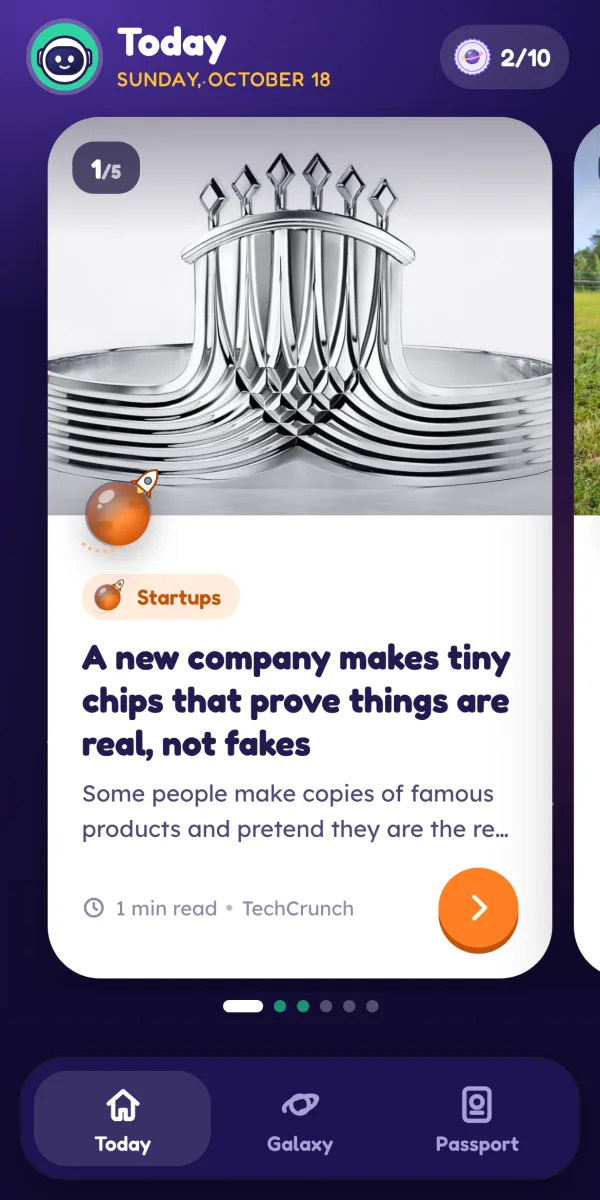
What it is not: it is not general news, so it will not tell your child about elections or sport. It runs in any browser today at app.osmokids.space; the Android app is coming to Google Play, and there is no iPhone app yet.
Is there a free news app for kids?
Yes, but read the small print. Most fully featured kids news apps charge a subscription. The best free options are websites:
- BBC Newsround: free general news with videos.
- Science News Explores: free science journalism for older kids.
- NewsForKids.net: simple, short world news.
- Newsela Lite: rotating free articles, but only for teacher accounts.
- Osmo's free tier: today's five stories, all 10 topic planets, three reading levels, read-aloud with the device voice, quizzes, the passport and the last seven days. Osmo Plus (archive, Hindi stories, natural narration, printable worksheets) is optional.
"Free" sometimes means paid for by advertising. Before you settle on any free news app for kids, open it yourself and look for ads, sign-up prompts and links that lead out to adult sites. Our guide to safe news sites for kids has a full checklist.
Which is best for your child's age?
| Age / class | What works | Good picks |
|---|---|---|
| 5 to 7 (K to Grade 2, Class 1 to 2) | Very short stories, read aloud together, no frightening topics | Osmo's youngest level, News-O-Matic's easiest level |
| 8 to 10 (Grades 3 to 5, Class 3 to 5) | A daily routine plus talk afterwards | News-O-Matic, TIME for Kids, Osmo, The Week Junior from 8 |
| 11 to 14 (Grades 6 to 9, Class 6 to 9) | Real headlines, bias and sourcing discussions | The Week Junior, Science News Explores, BBC Newsround, Newsela |
Common Sense Media's advice for children 7 and under is to keep frightening news, pictures and video away, and to reassure them their family is safe. For 8 to 12-year-olds, it suggests weighing maturity and temperament, and explaining that news outlets compete for clicks. That is a good rule of thumb for choosing which app to start with.
A daily news app for kids is not automatically better than a weekly one. Daily builds habit; weekly builds depth. Many families pair one of each. If you are in India, see our guide to the news app for kids in India, which covers Hindi options and kids newspapers.
How to choose the best news app for kids: a 10-point checklist
Use this on any kids news app, including ours. A good news app for kids should pass at least eight.
- Written for children, not adult news with a filter on top.
- More than one reading level, so it grows with your child.
- Named sources on every story, ideally with a link.
- A clear policy on scary topics. Does it cover war and crime? Either answer can be right, but you should know.
- No ads, and no "sponsored" stories.
- No third-party tracking. Check the app's privacy page or store privacy label.
- No open chat or public comments between children.
- A natural end point. A fixed number of stories beats an infinite scroll.
- Read-aloud for younger or struggling readers.
- A grown-ups area for settings and purchases, out of a child's reach.
How we checked these kids news apps
For each option, we opened the official website or app store listing in October 2026 and recorded only what it states: ages, formats, features and listed prices. Where an official price was not public (TIME for Kids, Newsela for families), we say so instead of guessing. Ages marked "Common Sense rating" come from Common Sense Media's Best News Sources for Kids list, updated in April 2026.
There is no single best news app for kids for every family; the right one is the one your child opens tomorrow without being asked. We left out products we could not confirm were still active. If you spot something that has changed, tell us and we will update the page.
Want to go further? Our current affairs for kids guide shows how to build a ten-minute daily news habit, with a real quiz from this week's stories, and our free printable worksheets turn any story into a hands-on activity.
Frequently asked questions
Is there a news app for kids?
Yes. Several services write news specifically for children. News-O-Matic is a daily kids news app on the App Store, The Week Junior has an app version of its weekly magazine, Newsela offers levelled news mainly through schools, and Osmo (our app) gives five science and technology stories a day in the browser. Many other good options, such as BBC Newsround and Science News Explores, are websites rather than apps.
Is there a free news app for kids?
Most of the strong free options are websites, not apps. BBC Newsround and Science News Explores are free to read online, and Newsela Lite gives teacher accounts a rotating set of free articles. Osmo's free tier includes today's five stories, all three reading levels, read-aloud and quizzes. Fully featured kids news apps such as News-O-Matic and The Week Junior charge a subscription.
What age should kids start reading the news?
There is no single right age, but kids news services start young. News-O-Matic's App Store listing says ages 6 to 14, The Week Junior targets 8 to 14, and Osmo is for about 5 to 14. For children under about 7, Common Sense Media advises keeping frightening news away entirely, so pick gentle, science-led stories and read them together.
Is a daily news app for kids better than a weekly magazine?
It depends on the child. A daily news app for kids builds a short, regular reading habit, which suits younger readers who like routine. A weekly magazine such as The Week Junior gives more depth and fewer screen sessions, which suits confident readers aged 8 and up. Many families combine one daily dose with one weekly read.
What makes a good news app for kids?
A good news app for kids is written for children (not just filtered adult news), offers more than one reading level, names its sources, has no ads or third-party tracking, avoids open comments or chat, and has a clear policy on frightening topics. It should also be easy to finish and put down, rather than an endless feed.
Sources
- Common Sense Media: Best News Sources for Kids (updated 21 April 2026)
- Common Sense Media: Explaining the News to Our Kids
- Tech & Learning: News and America's Kids (Common Sense Media key findings)
- Apple App Store: News-O-Matic: Reading for Kids
- News-O-Matic: Parents
- News-O-Matic: Online Learning Resource for K-8
- Newsela (official site)
- Newsela Help Center: Newsela Lite (Free Account)
- TIME for Kids (official site)
- The Week Junior US (official site)
- Apple App Store: The Week Junior US
- The Week Junior UK (official subscription site)
- Science News Explores (Society for Science)
- BBC Newsround (CBBC)
- BBC Newsround: Advice if you're upset by the news
- DOGOnews homepage (Internet Archive snapshot, October 2026)
- NewsForKids.net: About
Written and fact-checked by the Osmo Editorial Team. Osmo is not affiliated with the apps, publishers or organisations mentioned. Spotted something out of date? Tell us.